Why Many AI Organizations Are Underestimating August 2026
Most organizations using AI are preparing for compliance. Far fewer are preparing for operational governance.
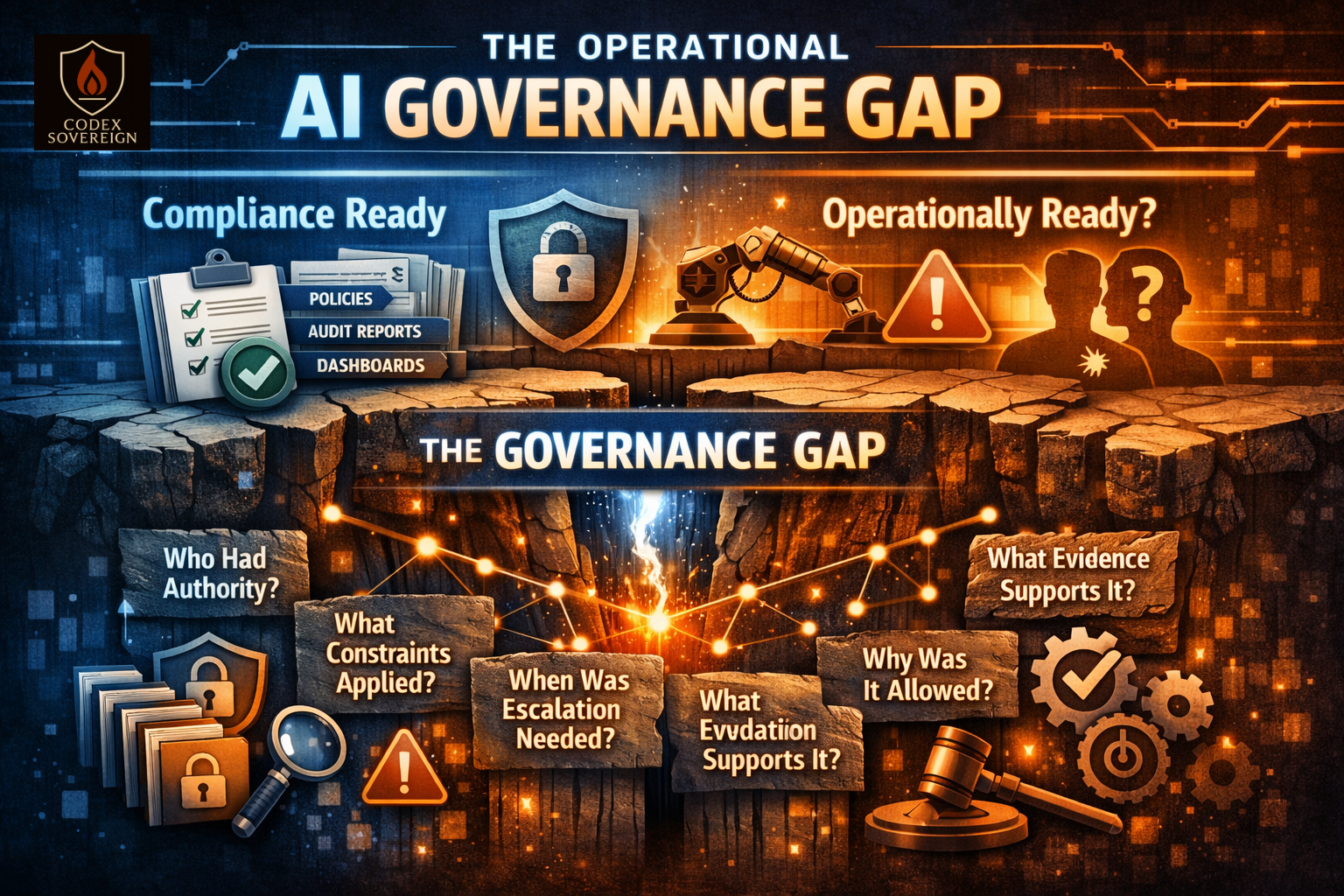
Surveys show widespread adoption, yet far fewer organizations feel ready for the obligations tied to high‑risk AI systems under the EU AI Act. The challenge isn’t a lack of policies - it’s the gap between documented governance and runtime governance.
Organizations can explain what their systems are intended to do.
Far fewer can demonstrate:
• who had authority to act
• what constraints were in force
• when escalation was required
• why execution was permitted • what evidence supports that decision
As AI systems become autonomous, governance can’t live only in policies, dashboards, or post‑event reviews. The question shifts from “Do we have governance?” to “Can we prove governance was enforced when the system acted?”
Audit readiness ≠ runtime readiness. Policies and monitoring may exist, but without operational controls to prove authority validation, admissibility, escalation enforcement, traceability, and execution governance, organizations remain exposed.
The EU AI Act makes this evidentiary: it’s not enough to show policies existed; organizations must prove governance was applied.
At Codex Sovereign™, my work focuses on this distinction: establishing authority, admissibility, traceability, runtime oversight, and governance continuity across autonomous systems.
Five Questions Every Organization Must Answer Before August 2026:
- Why was an AI action permitted?
- Who had authority over it?
- Was human oversight demonstrated where required?
- Can replay‑verifiable governance evidence be produced?
- Did governance remain intact across handoffs, resets, delegation, and reentry?
If these are hard to answer today, they mark governance gaps worth addressing before August 2026.
#EUAIAct #AIGovernance #AIRegulation #Compliance #RuntimeGovernance #AgenticAI #CodexSovereign